

How much water to store
CDC says to store at least 1 gallon per person, per day, for 3 days. That covers drinking, cooking, and brushing teeth. CDC also says to aim for a two week supply if you can, and to store more if someone is pregnant or sick, if you have pets, or if you live in a hot climate.
1 gallonPer person, per day
3 daysThe minimum to store
2 weeksThe supply to aim for if you can
Store more if someone is pregnant or sick, if you have pets, or if you live in a hot climate.
CDC does not say how much more. So the calculator below leaves that to you instead of guessing a number on your behalf.
| People | 3 daysCDC minimum | 7 days | 14 daysCDC goal |
|---|---|---|---|
| 1 | 3 gal25 lb water | 7 gal58 lb water | 14 gal117 lb water |
| 2 | 6 gal50 lb water | 14 gal117 lb water | 28 gal234 lb water |
| 3 | 9 gal75 lb water | 21 gal175 lb water | 42 gal350 lb water |
| 4 | 12 gal100 lb water | 28 gal234 lb water | 56 gal467 lb water |
| 5 | 15 gal125 lb water | 35 gal292 lb water | 70 gal584 lb water |
| 6 | 18 gal150 lb water | 42 gal350 lb water | 84 gal701 lb water |
How these numbers are worked out. Gallons are people multiplied by days multiplied by 1 gallon per person per day, the CDC figure. Water weight uses approximately 8.34 pounds per US gallon, the USGS conversion factor, rounded to the nearest pound. Empty containers are not included. Three days and two weeks are CDC's own two figures; seven days is simply a point between them and is not a federal recommendation. Sources are listed at the bottom of this page. Reviewed 2026-09-16.
Fit the reserve into your home
Start with the three-day quantity and an actual place to keep it. For two people, that is 6 gallons before extra needs: about 50 pounds of water in total. Six unopened 1-gallon bottles divide that into smaller loads. The water still weighs the same; measure the space those bottles actually occupy.
These are weight examples, not lifting limits or product recommendations. They use 8.34 lb per US gallon and exclude the empty container. Choose a load and a way of dispensing water that the person using it can manage.
- Measure the storage spot and the route to it. Check the container's actual outside dimensions, door opening, handle clearance and room to pour or use a spigot. In an apartment, look for reachable indoor space that meets the temperature guidance below; a hot balcony is not a substitute.
- Plan each move. Can you bring it from the tap or shop, cross any stairs and reach the glass or cooking pot? Smaller bottles may be more practical than a full 5- or 7-gallon can. A large barrel needs an in-place filling and dispensing plan; do not count it as water you can carry when leaving.
- Check support and access. Keep exits clear. Use a surface whose load rating covers the water and containers; spreading containers around does not establish a floor or shelf's safe capacity. If the load is uncertain, check with the building manager or a qualified professional. Stack only when the exact container's maker permits it; Reliance's Aqua-Tainer is empty-stack only.
- Write down what you have. Record total gallons, each storage location and the next replacement date on your household checklist. Keep the dates visible and leave room to inspect containers. If two weeks will not fit, record the remaining gap and your local utility's emergency updates or distribution information.
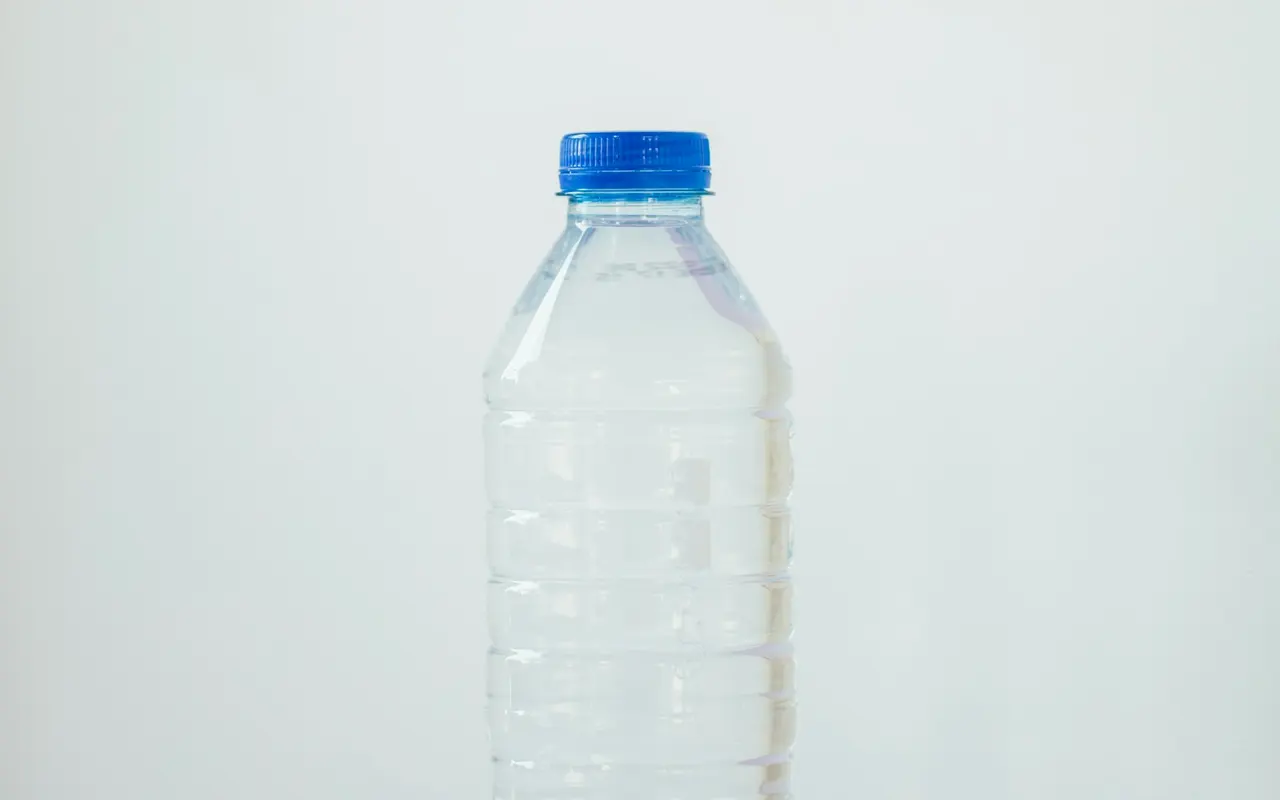
Choose a quantity and storage location your household can manage, then keep a replacement schedule with the supply.
Build water into your household reserve Photo: charlesdeluvio / UnsplashStoring water so it stays good
Unopened, store bought bottled water is the safest and most reliable option, and it needs no preparation. If you fill your own containers instead, a few things matter.
- Use food grade containers. CDC recommends FDA approved food grade water storage containers, which will not pass harmful substances into the water.
- Never reuse a container that held something toxic. That includes old bleach and pesticide bottles.
- If it is not a water container, check three things. A lid that closes tightly, tough unbreakable material rather than glass, and a narrow opening if possible so you can pour.
- Clean and sanitize before filling. Wash with soap and rinse. Then mix 1 teaspoon of unscented household chlorine bleach containing 5% to 9% sodium hypochlorite into 1 quart of water, cover, and shake so the solution touches every inside surface. Wait at least 30 seconds, pour it out, and let the container air dry. This solution sanitizes the empty container; it is not a drinking-water treatment dose.
- Label it and date it. Write "drinking water" and the day you filled it.
- Replace self-filled water every six months, or sooner if the container maker instructs.CDC gives the six-month interval; Reliance recommends changing stored water at least every 90 days. Follow the date on commercially bottled water instead.
- Keep it cool, dark, and away from chemicals. CDC gives a range of 50°F to 70°F, out of direct sunlight, and away from things like gasoline and pesticides.
- Do not put your hands in it. Use a clean scoop each time you take water out.
Weight is worth planning for. The table above gives the approximate weight of the water alone, and it adds up faster than people expect. Two weeks for a family of four is 56 gallons, which comes to about 467 pounds. Check the storage support, container size and dispensing plan before you fill that much.
If the water may not be safe
Stored water can run out, and tap water can stop being trustworthy. Before you treat any water, ask one question first: is the problem germs, or is it chemicals?
Boiling and disinfecting kill germs. They do not remove chemicals. EPA is direct about it: boiling or disinfection "will not destroy other contaminants, such as heavy metals, salts, and most other chemicals." CDC goes further for the worst cases. You cannot make water containing fuel, toxic chemicals, or radioactive material safe by boiling or disinfecting it. If you think your water has any of those in it, use bottled water or a different source and contact your health department.
If germs are the problem, there is a method for the situation you are actually in. See how to make water safe to drink.
Use the calculator above to work out capacity, then choose a size you can manage safely. You can also use unopened store-bought bottled water; buying one of these containers is optional.
Reliance says the Aqua-Tainer must only be stacked when empty. Neither container treats unsafe water. Keep water treatment separate from storage.
Add your reserve and a replacement date to your household emergency checklist.
More on water
- How to make water safe to drinkChoose a treatment method, then use the right dose or contact time.
- Emergency water filters: what they remove and four optionsPortable, gravity and purifier bottles compared against CDC filter guidance.
Sources
- CDC, "How to Create an Emergency Water Supply" (page dated June 27, 2025). cdc.gov
- EPA, "Emergency Disinfection of Drinking Water" (last updated February 24, 2026). epa.gov
- CDC, "How to Make Water Safe in an Emergency" (page dated September 19, 2024). cdc.gov
- USGS Water Science School, "A Million Gallons of Water" (8.34 pounds per gallon). usgs.gov