






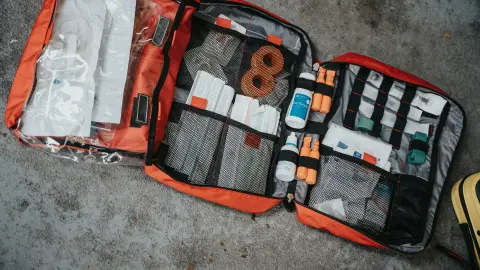


Start with an understandable inventory and an accessible location. A large piece count is less useful than the right supplies, clear instructions and a routine for replacing what gets used.
Organize by task
Group wound-care supplies, protective items and personal needs so another household member can find them.
Make refills easy
Keep an inventory of what you use, replace and inspect. A large piece count does not tell you whether a kit fits.
Organize by the task a supply supports
The Red Cross household list includes assorted adhesive bandages, gauze, tape, nonlatex gloves, a cold compress, thermometer, tweezers, emergency blanket and first-aid instructions. Use that checklist as a starting point, then adapt the contents to your household with appropriate professional guidance.
Group supplies so they can be found without emptying the whole case. Keep sterile packaging intact. Store sharp items securely, and keep medicines and other unsuitable items out of children’s reach. A kit does not replace first-aid training or emergency services.
Choose an organized case or a complete kit
A prepacked kit can save assembly time, but read the actual inventory and sizes. Many tiny duplicate items can inflate the count. Check whether gloves, dressings, instructions and storage are useful for the people who may need them.
An empty case with selected refills can work well when you already own supplies. Compare opening and carrying the case, compartment visibility, room for household-specific items and whether individual supplies can be replaced easily.
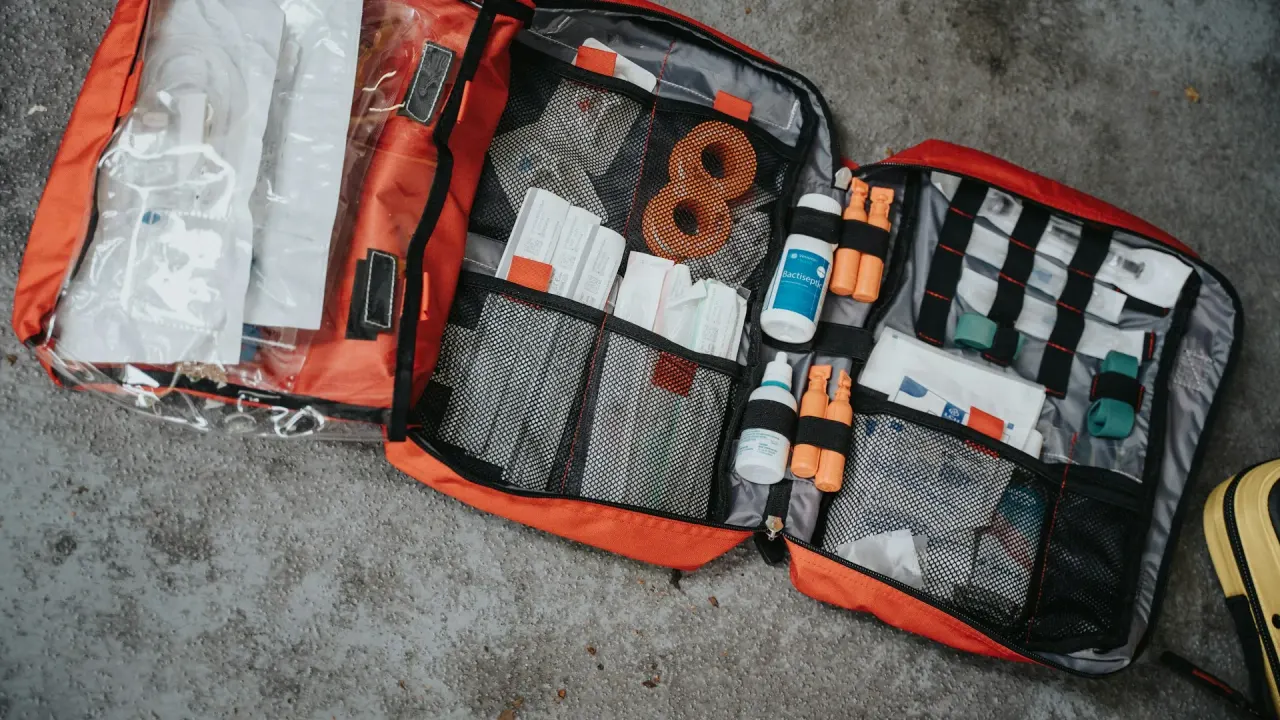
Group supplies so they can be found and checked. This stock kit is an organizational example, not a complete list of supplies for your household.
Add the kit location to your plan Photo: Mathurin NAPOLY / matnapo / UnsplashKeep personal health planning separate
Maintain a current medication list, relevant contacts and essential records. Discuss prescription supply, refrigeration and powered equipment with your clinician, pharmacist or equipment provider. Do not treat medicines included in a commercial kit as suitable for every person.
Write down who knows the household’s needs and who can help if the usual caregiver is unavailable. Connect refrigeration or equipment requirements to a device-specific outage plan, rather than relying on a generic portable battery recommendation.
Make the location obvious
The Red Cross recommends keeping kits at home and in the car. Choose accessible locations appropriate to the contents, household and storage instructions. Make sure another adult can find the kit and knows which supplies are restricted or need special handling.
An evacuation bag has different weight and space limits from a home cabinet. Decide which essential documents and personal items travel with you, and keep a list so preparations do not depend on memory under pressure.
Inspect, replenish and practice
Check the kit regularly. Replace consumed items, expired supplies and damaged packaging. Review the inventory when family needs or travel plans change. Keep compatible refill information with the kit to avoid replacing an entire case for a few missing items.
Practice finding supplies during normal conditions and seek recognized first-aid training. Reading an online checklist is preparation for organizing a kit, not a demonstration that someone is qualified to diagnose or treat an injury.
Connect the kit to the household plan
Add the kit location and health contacts to the family checklist. Keep safe lighting and charged communications nearby, and consider personal health needs when building the longer-disruption reserve.
For a purchase, compare contents, refill availability, organization, portability and storage requirements. Buy for the tasks you can reasonably prepare for, rather than the largest advertised piece count.
Sources and selection approach
We use the primary guidance below to explain household decisions. Equipment-selection judgments are our own; listing a source does not imply that agency endorses a product.