







Check two separate things: can the battery start and run your refrigerator, and does it store enough energy for the time you need? A large watt rating answers neither question on its own.
A refrigerator cycles on and off. Its daily energy changes with the room temperature, thermostat, door openings, food load and defrost cycle. Dividing battery capacity by one moment's compressor wattage can give a misleading runtime. Start with your own appliance and keep a food-safety plan alongside the electrical plan.
Measure a full day if you can
- Identify the model, voltage and electrical requirements in its manual.
- Use a suitable energy meter, within its ratings and instructions, to observe representative daily kilowatt-hours. Account for unusually hot conditions separately.
- If you only have the annual energy-label figure, divide it by 365 as a rough starting point. A laboratory label is not a measurement of your kitchen.
- List any other loads sharing the battery. A router, lights and charging devices also consume the reserve.
For example, 1.5kWh per day equals 1,500Wh per day, or an average 62.5W over 24 hours. That average is useful for energy planning; it is not the inverter output needed to start the compressor.

Write down the refrigerator model, measured daily energy and the loads that will share its backup supply. Keep those notes beside your runtime estimate.
Photo: Jan Kahanek / UnsplashEstimate runtime from daily energy
The calculation is nominal battery Wh multiplied by an assumed usable fraction, divided by daily appliance Wh, then multiplied by 24. It assumes a constant daily pattern and no recharging. It does not model startup compatibility or certify a particular pairing. For a rough startup estimate, try the outage power calculator.
| Nominal battery capacity | Energy allowance | Estimated time before an extra reserve |
|---|---|---|
| 1,024Wh | 819Wh | 13.1 hours |
| 2,048Wh | 1,638Wh | 26.2 hours |
| 4,096Wh | 3,277Wh | 52.4 hours |
Actual results may be shorter. The 80% value is an adjustable planning assumption, not an efficiency measurement for the products below. Inverter idle draw, battery condition and a changing fridge load can be significant. Keep margin rather than planning to empty the battery at exactly the moment power returns.
Check startup before relying on the setup
Confirm the refrigerator's starting demand, the battery's rated and surge output, and any load-specific restrictions with the manufacturers. A “boost” mode is not the same as normal continuous output. A successful trial in normal conditions is useful preparation, but it does not guarantee performance under every outage condition.
Plan charging and food safety separately
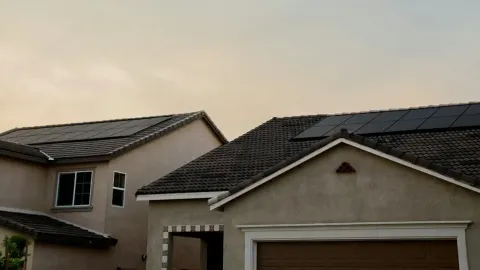
Solar panels may replenish the battery, but a storm can also limit sunlight. Compare a conservative daily recharge estimate against the refrigerator's daily use. A larger battery delays depletion; it does not remove the need to recharge during a longer outage.
Keep refrigerator and freezer doors closed when power is unavailable and use an appliance thermometer. Follow the current FoodSafety.gov outage guidance for deciding what to keep or discard, and read how long food lasts in a fridge without power for the four-hour rule and the cooler plan. A battery's display cannot establish that food has remained safe, and tasting food is not a safety test.
Cold food through an outage, step by step
- Up to 4 hoursKeep both doors closed. A closed refrigerator keeps food safe for up to 4 hours.
- At 4 hoursMove fridge perishables to a cooler with ice and keep them at 40°F or below.
- Up to 48 hoursA full, closed freezer holds about 48 hours; a half-full one about 24.
- Longer outagesDry ice for the freezer, or backup power sized to each appliance’s daily energy.
These are candidates for your calculations, not verified matches for your refrigerator. Use the solar-generator comparison to compare their specifications and total setup needs. Include water, pantry food and communications in your longer-outage plan.
Sources and assumptions
- Jackery: runtime-estimate limits for changing appliance loads
- EcoFlow: capacity, rated power and startup demand
- FoodSafety.gov: food safety during outages
- CDC: outage and generator safety
Also protecting frozen food? Read the freezer outage safety guide. Compare the battery choices in the side-by-side equipment tool.