







Hurricane preparation is a schedule, not a shopping trip. The Atlantic season runs June 1 to November 30 and peaks around September 10. A hurricane watch is issued 48 hours before tropical-storm-force winds are expected to arrive; a warning, 36 hours before. Shopping, pharmacy trips and ladder work belong in the watch window at the latest, because once those winds arrive, outdoor work stops.
Who this is for: households on the Atlantic and Gulf coasts, and inland areas that get a hurricane's rain and wind, working out what to gather before the season and what to do at each alert. It covers both sheltering at home and leaving. Local officials set evacuation zones and orders; follow them over any general checklist.
What a watch and a warning actually mean
| Stage | Definition | Household action |
|---|---|---|
| Before the season | June 1 to November 30 in the Atlantic. Peak activity mid-August to mid-October. | Know your evacuation zone, review insurance, cut and label window covers, stock the kit. |
| Hurricane watch | Sustained winds of 74 mph or more are possible in the area, issued 48 hours before tropical-storm-force winds are expected. | Fill fuel and prescriptions, get cash, charge devices and batteries, install window protection and clear the yard while it is still safe to be outdoors, freeze water containers, decide who goes where. |
| Hurricane warning | Hurricane conditions are expected, issued 36 hours in advance. Preparations become difficult once tropical-storm winds arrive. | Finish indoor preparations and bring in the last loose items. Do not start ladder work. Leave immediately if officials order it. |
| Storm surge watch or warning | Life-threatening inundation is possible (48 hours) or expected (36 hours). Surge is the leading cause of hurricane deaths. | Treat a surge warning in your zone as the evacuation trigger. Surge can travel miles inland along rivers and canals. |
| Extreme wind warning | Sustained winds of 115 mph or more expected within an hour. | Shelter in an interior room, closet or hallway on the lowest level, with as many walls as possible between you and outside. |
Flood insurance is the item with the longest lead time. Standard homeowners policies generally do not cover flood damage, and a National Flood Insurance Program policy takes effect 30 days after purchase, with limited exceptions such as a policy bought at closing. Confirm the effective date and any exception that applies to you before relying on a new policy.
The hurricane kit, in the order it matters
This list follows Ready.gov's basic disaster kit and CDC water guidance, arranged for the way a hurricane actually unfolds: a period without utilities, possibly without roads, and possibly away from home. Use the two-week checklist for quantities and the household plan; this page adds what is specific to a hurricane.
Water and food
- Water: at least 1 gallon per person per day for several days, for drinking and sanitation. CDC says to aim for a two-week supply at home if you can. Use the water reserve calculator and fill containers before the watch, when the tap is still reliable.
- A several-day supply of food that needs little cooking, water or refrigeration, plus a manual can opener. Plan for the four-hour refrigerator rule and the freezer time limits rather than hoping the power stays on.
- A way to treat water if a boil-water notice follows the storm: fuel to boil, or an emergency water filter with disinfection.
Information and light
- A battery-powered or hand-crank radio and a NOAA Weather Radio with tone alert, in Ready.gov's wording. Cell service and internet may fail; a weather receiver does not depend on them. Our weather radio guide explains SAME county alerts.
- Flashlights or headlamps and spare batteries, one per person. Avoid candles.
- Phone chargers and a charged power bank; a larger battery for essential loads if outages in your area run for days.
Health, documents and money
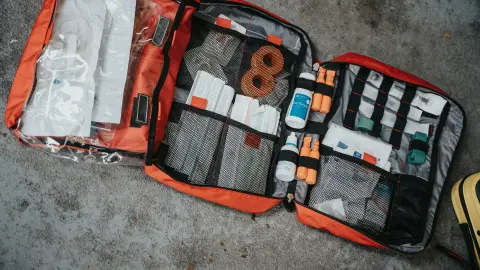
- First-aid kit, prescription medications for at least a week, over-the-counter medicines, glasses or contact lens supplies. See the first-aid kit checklist.
- Copies of insurance policies, identification and bank records in a waterproof container, plus a password-protected digital copy. Photograph rooms and valuables before the season for claims.
- Cash. Card readers and ATMs need power and connectivity.
- Sanitation supplies: soap, disinfectant, garbage bags, moist towelettes, and a bucket-toilet arrangement if sewer service could fail.
Hurricane-specific items
- Window protection, cut to fit and labeled before the season. Plywood, tarps, duct tape and a wrench or pliers for utility shutoffs.
- Infant, pet and mobility-equipment supplies, and pet carriers if you might evacuate.
- A full fuel tank in the vehicle before the watch; gas stations close and lines form quickly.
- A local paper map and written contact numbers in case phones fail.

Shutters, plywood, gutters and loose objects are watch-stage tasks. Once tropical-storm winds arrive, ladders and roofs become the hazard.
Review the storm and flood preparedness hub Photo: Max Bender / UnsplashProtect the home: what works and what does not
The National Weather Service says permanent storm shutters offer the best protection for windows. The second option is 5/8-inch exterior-grade or marine plywood, cut to fit each opening and ready to install. Reinforce the garage door; a failed garage door lets wind pressurize the house.
- Clear gutters and drains and bring in anything the wind can pick up: furniture, planters, trash cans, grills.
- Move important items and documents off the floor and away from windows. A basement or ground floor is the first place water goes.
- If you have a sump pump, its backup matters most during exactly this kind of storm. The sump-pump backup guide explains the options and the installer questions.
- Learn where the water, gas and electrical shutoffs are, and when officials advise turning them off.
Decide about evacuation before you need to
Evacuation zones are drawn around storm surge and flooding risk, and officials clear them in order, usually Zone A first. Find your zone through your county emergency management office now. Then decide two things while calm: where you would go, and what you can carry. Six inches of moving water can knock a person down; a foot can carry a vehicle away, so the plan has to work before roads flood.
- If you live in a mandatory evacuation zone and officials tell you to leave, go immediately. Do not wait for the storm to strengthen.
- Take the go-bag portion of your kit, medications, documents, pets and chargers. Leave the bulk water and pantry at home unless you have room.
- Tell someone outside the storm area where you are going. Use text messages and social media rather than voice calls to keep lines free.
- If you are not in an evacuation zone and your home is sturdy, an interior room on the lowest floor that is not at risk of flooding is the shelter location during the worst winds.
After the storm
- Wait for the all-clear. Do not enter a damaged building until local authorities say it is safe, and stay away from downed power lines; report them to the utility.
- Run any generator outdoors, more than 20 feet from windows, doors and vents. CDC says never inside a home or garage, even with doors open. A battery-powered carbon monoxide alarm belongs in the kit for exactly this period.
- Assume tap water is unsafe until told otherwise. Use bottled, boiled or treated water. Discard any food that touched floodwater, and apply the four-hour rule to the refrigerator.
- Document damage with photographs before cleaning up, then contact your insurer.
- Wear an N95, goggles and gloves for mold cleanup, and never mix bleach with other cleaners. CDC's guidance caps cleaning solutions at 1 cup of bleach per gallon of water.
These are the same researched options that appear in our water, gear and power guides; they are here so you can see them in the hurricane context. None of them replaces the evacuation decision or window protection, which are the two hurricane-specific steps with the largest effect.
Sources and review
Checked September 9, 2026. Alert definitions, timing, and safety steps follow the federal agencies below. Equipment choices are editorial and are not agency endorsements.
- National Weather Service: hurricane watches and warnings
- National Weather Service: hurricane action, including window protection
- National Hurricane Center: season dates and climatology
- National Hurricane Center: storm surge overview
- Ready.gov: hurricanes
- Ready.gov: build a kit
- CDC: creating and storing an emergency water supply
- CDC: staying safe after a hurricane
- CDC: carbon monoxide and generators
- CDC: returning home after a disaster
- FloodSmart: NFIP policy terms and the 30-day waiting period
- National Weather Service Mobile: wind mitigation and why taping windows does nothing