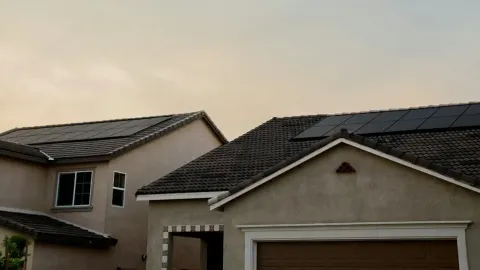









"Whole-house" describes the wiring, not the runtime. An installed battery with a transfer device can feed your electrical panel, so lights, outlets and hard-wired appliances keep working without extension cords. How long it lasts still comes down to the battery's usable energy divided by what you leave switched on.
A home battery system has three parts: the battery, an inverter that turns its DC energy into household AC, and an islanding device, often called a gateway, backup switch or transfer switch, that disconnects the house from the grid during an outage so the battery can power it safely. Without that disconnect, a battery cannot legally or safely feed house wiring. The same rule applies to generators: the Consumer Product Safety Commission calls plugging a generator into a wall outlet "backfeeding" and warns that it can electrocute utility workers and neighbors.
The two numbers that decide everything
- Usable energy, in kilowatt-hours. A Tesla Powerwall 3 stores 13.5 kWh; an Enphase IQ Battery 5P stores 5.0 kWh usable and is installed in multiples. This is the fuel tank. An average U.S. household used about 29 kWh per day in 2020 according to the Energy Information Administration, so a single 13.5 kWh battery is roughly half a normal day, or several days of essentials only.
- Continuous output, in kilowatts. Powerwall 3 is configurable from 5.8 to 11.5 kW; IQ Battery 5P delivers 3.84 kW continuous with short peaks to 7.68 kW. This is the pipe. Central air conditioning, an electric range, a well pump and a dryer running together exceed most single-battery systems, which is why installers talk about "partial home backup" and critical-load panels.
Motor starts are the third check. A compressor or pump draws far more for a fraction of a second than it does running. Tesla publishes a 185 A locked-rotor start rating for Powerwall 3; other manufacturers publish peak output for a few seconds. Your installer matches those figures to the specific appliances you want backed up.
What a whole-house battery can realistically run
| Load | Running power | Energy per day | On a 13.5 kWh battery |
|---|---|---|---|
| Household refrigeration | Roughly 100 to 500 W while a compressor runs | About 1.7 to 2.5 kWh | Days, if it is the main load |
| Lights, phones, router, television | Tens of watts each | About 1 to 2 kWh | Days |
| Furnace blower or boiler pump | Roughly 0.5 to 1.1 kW while running | Several kWh in cold weather | One to two days, weather dependent |
| Well pump, 1/2 hp | Under 1 kW running; starting surge of roughly 2 kW | Depends on use | Fine for output; check the start rating |
| Central air conditioning, 3 ton | Roughly 5 kW running; 7 kW or more starting | 20 kWh or more on a hot day | A few hours; needs a large or multi-battery system |
| Electric range, dryer, water heater | 3 to 5 kW each | Depends on use | Usually left off the backup circuits |
The refrigeration figure comes from EIA residential consumption data, which puts average household refrigeration, all refrigerators and freezers in the home combined, at roughly 610 to 930 kWh a year depending on the state, or about 1.7 to 2.5 kWh a day. The others are common generator-sizing figures; your equipment's nameplate and a plug-in energy meter give better numbers. Use the essential-load planner to add up your own outage day before talking to an installer.
An installed system's price includes the inverter, the islanding device, permits, inspection and often a subpanel for backed-up circuits. The battery is only part of the quote.
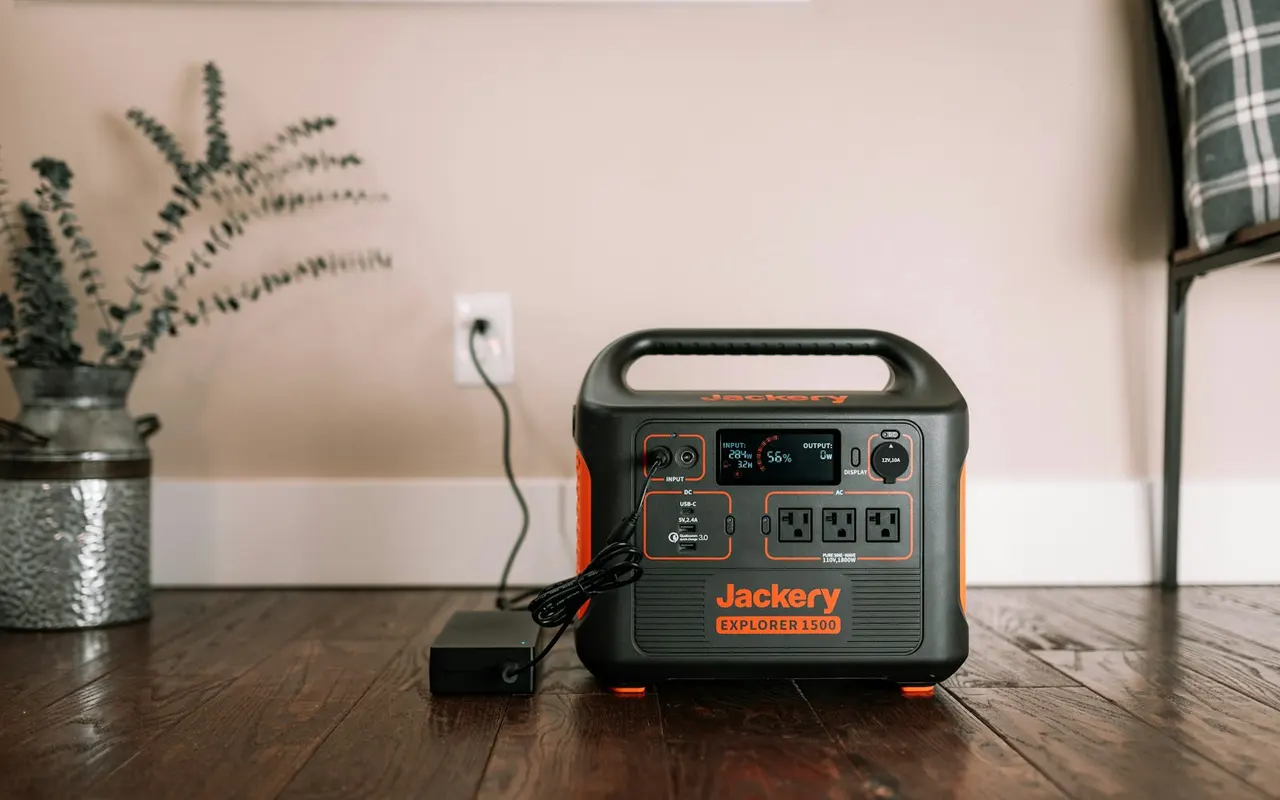
Compare the portable alternatives Photo: Jackery Power Station / UnsplashInstalled and plug-in systems, side by side
| System | Energy | Continuous output | Expansion | Backup connection |
|---|---|---|---|---|
| Tesla Powerwall 3 | 13.5 kWh | 5.8 to 11.5 kW, configurable | Up to 4 units plus 3 expansion packs | Gateway 3 or Backup Switch for whole-home; Backup Gateway 2 for partial-home |
| Enphase IQ Battery 5P | 5.0 kWh usable | 3.84 kW; 7.68 kW for 3 seconds | Multiple units per system | IQ System Controller 3 or 3G |
| Generac PWRcell 2 | 9 to 18 kWh per cabinet | Up to 11.5 kW with two full cabinets | Up to 36 kWh per inverter | Generac transfer equipment |
| EcoFlow DELTA Pro Ultra | 6 kWh per battery | 7.2 kW per inverter | Up to 90 kWh; 21.6 kW with three inverters | Smart Home Panel 2, 12 circuits, 20 ms switchover |
| Anker SOLIX F3800 | 3.84 kWh | 6 kW at 120 or 240 V | Up to 53.8 kWh with expansion batteries | Home Power Panel or a 10-circuit manual transfer switch |
The last two rows are the middle ground: portable stations that can be wheeled in and plugged into a professionally installed transfer switch or smart panel, then unplugged and used elsewhere. They cost less than a fully installed system but still need the electrician for the panel connection. Our portable power station guide covers the smaller 1 kWh to 4 kWh units that need no installation at all.
What it costs, and the credit that expired
EnergySage's marketplace data for the first half of 2026 puts a typical installed 13.5 kWh battery at about $15,600 before incentives, or roughly $1,160 per kWh across brands, with a Powerwall 3 install typically around $13,500. Those are quotes from a national marketplace; local labor, panel upgrades and whether solar is installed at the same time move the number substantially.
- Expect a permit and an inspection. Battery systems are listed to UL 9540 and installed under the electrical code's energy-storage rules; your jurisdiction may also require clearance from doors and windows.
- Ask the installer which circuits are backed up, what the system does when the battery is empty, and how it recharges without the grid. A battery with no solar or generator input is a one-shot reserve.
- Get the warranty in writing: 10 years is common for the installed systems above, with cycle or throughput limits.
Installed system or portable station?
Choose an installed system when
You want hard-wired loads such as a well pump, furnace or sump pump to run automatically, you have solar or plan to add it, and outages are frequent or long enough to justify a five-figure project.
Choose a portable station when
Your essentials plug into outlets, you rent or may move, you want the battery for trips as well as outages, or the budget is closer to $1,000 to $4,000. Start with the refrigerator runtime guide.
Either way, the plan starts with loads. A household that can live on 3 kWh a day during an outage has more options, and spends less, than one that needs 30. Powered medical equipment needs a device-specific plan agreed with its supplier; none of the systems above certifies a medical backup.
Next: total your outage day with the essential-load planner, then read the portable power station comparison or take your load list to an installer.
Sources and review
Checked September 9, 2026. Specifications come from manufacturer documents; cost figures are marketplace averages and will differ from any individual quote. This page is planning guidance, not an engineering design or a tax opinion.
- Tesla Powerwall 3 datasheet
- Enphase IQ Battery 5P
- Generac PWRcell 2 overview
- EcoFlow DELTA Pro Ultra
- Anker SOLIX F3800
- EnergySage: how much do home batteries cost
- IRS: residential clean energy credit
- CPSC: portable generator safety alert on backfeeding
- U.S. Department of Energy: solar-plus-storage 101
- EIA: 2020 residential energy consumption release
- Howell-Oregon Electric Cooperative: generator sizing chart