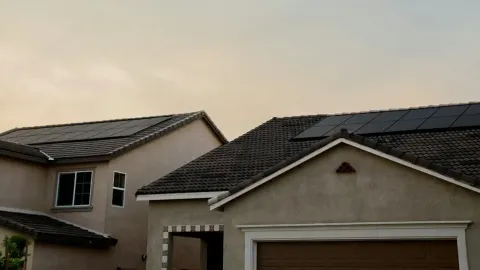









Start with the loads you need to keep running. A solar generator usually means a rechargeable power station paired with solar panels. The battery stores energy; the panels replenish it when conditions allow. Neither the product name nor a large output-watt number tells you how long your home will stay powered.
For storms and longer outages, the useful question is whether you need a few plug-in essentials, a larger reserve for those essentials, or selected home circuits. Those are different projects. A larger battery can be useful, but it does not automatically solve heating, air conditioning, well-pump startup, or weeks without reliable charging.
Three checks before comparing brands
- Energy: record what the appliances use over a full day, in watt-hours or kilowatt-hours. Start with the refrigerator backup guide if food storage is the priority.
- Output: add the loads that will run together, then check startup demand for motors. Rated continuous output and surge limits are different. Do not substitute a proprietary boost rating for the normal output rating.
- Connections: check voltage, outlet type, charging ports, and the appliance manual. A plug-in battery setup is simpler than powering household wiring.
Compare stored energy, not just watts
| Model | Nominal energy | Rated AC output | Why consider it? |
|---|---|---|---|
| Jackery Explorer 1000 v2 | 1,070Wh | 1,500W | A smaller essential-load setup. |
| Anker SOLIX C1000, original | 1,056Wh | 1,800W | Similar energy, a different output limit. |
| EcoFlow DELTA Pro 3 | 4,096Wh | 4,000W | A substantially larger reserve and system footprint. |
The 4kWh model is the higher-capacity choice here, not a recommendation that every household needs one. Four times the nominal energy can extend a matched load's runtime, but extra equipment, conversion losses and changing loads still matter. Plan where the battery will live and how it would move before buying a large wheeled unit.
What can each one run?
We may earn a commission if you buy through links on this page. It costs you nothing extra. As an Amazon Associate I earn from qualifying purchases.
Pick what you would plug in during an outage. Each station shows whether it can run them together, whether it can start the ones with motors, how many outlets they need and how long the battery lasts.
What would you keep running?
A focused set of essentials
Jackery Explorer 1000 v2
About 9 hours for a fridge, 2 LED lamps, 2 phones charging and a Wi-Fi router
- Runs them together481 W of its 1,500 W output
- Can start the motorsAbout 1,281 W at start-up, of its 3,000 W surge
- More plugs than outlets4 AC plugs, 3 AC outlets
- Stored energy
- 1,070 Wh
- AC output
- 1,500 W
- Surge
- 3,000 W
Check on Amazon for Jackery Explorer 1000 v2 (opens in a new tab)
Same size, more output
Anker SOLIX C1000
About 9 hours for a fridge, 2 LED lamps, 2 phones charging and a Wi-Fi router
- Runs them together481 W of its 1,800 W output
- Can start the motorsAbout 1,281 W at start-up, against its 1,800 W rated output
- Enough outlets4 AC plugs, 6 AC outlets
- Stored energy
- 1,056 Wh
- AC output
- 1,800 W
- Surge
- Not listed
Larger measured needs
EcoFlow DELTA Pro 3
About 34 hours for a fridge, 2 LED lamps, 2 phones charging and a Wi-Fi router
- Runs them together481 W of its 4,000 W output
- Can start the motorsAbout 1,281 W at start-up, of its 8,000 W surge
- Enough outlets4 AC plugs, 4 AC outlets
- Stored energy
- 4,096 Wh
- AC output
- 4,000 W
- Surge
- 8,000 W
Check on Amazon for EcoFlow DELTA Pro 3 (opens in a new tab)
How this works. Runs together: the running watts of everything on your list, against each station's rated continuous AC output. Start-up: everything running plus the largest extra a motor draws for a moment as it starts, against the surge rating (one motor starting at a time). Lasts: 80% of stored energy, a planning allowance for conversion losses, divided by your daily use; no recharging. Station figures are the manufacturers' published specifications. Appliance figures are typical values; the label on your own appliance, or a plug-in watt meter, gives the real number, and you can type it in.
Anker SOLIX C1000: Anker lists 2,400 W as SurgePad, a mode for heating devices, and publishes no motor-start surge, so start-ups are checked against its 1,800 W rated output.
EcoFlow DELTA Pro 3: Four standard 120V outlets (NEMA 5-20R); its 30A RV and 240V outlets need matching plugs, and 120V and 240V cannot run at the same time.
Sources: Champion Power Equipment generator wattage chart; US Department of Energy FEMP light bulb guidance; Apple 20W USB-C Power Adapter; ResMed AirSense 11 user guide; station and panel specifications from Jackery, Anker and EcoFlow.
Open the full power calculator, with more stations and solar panels
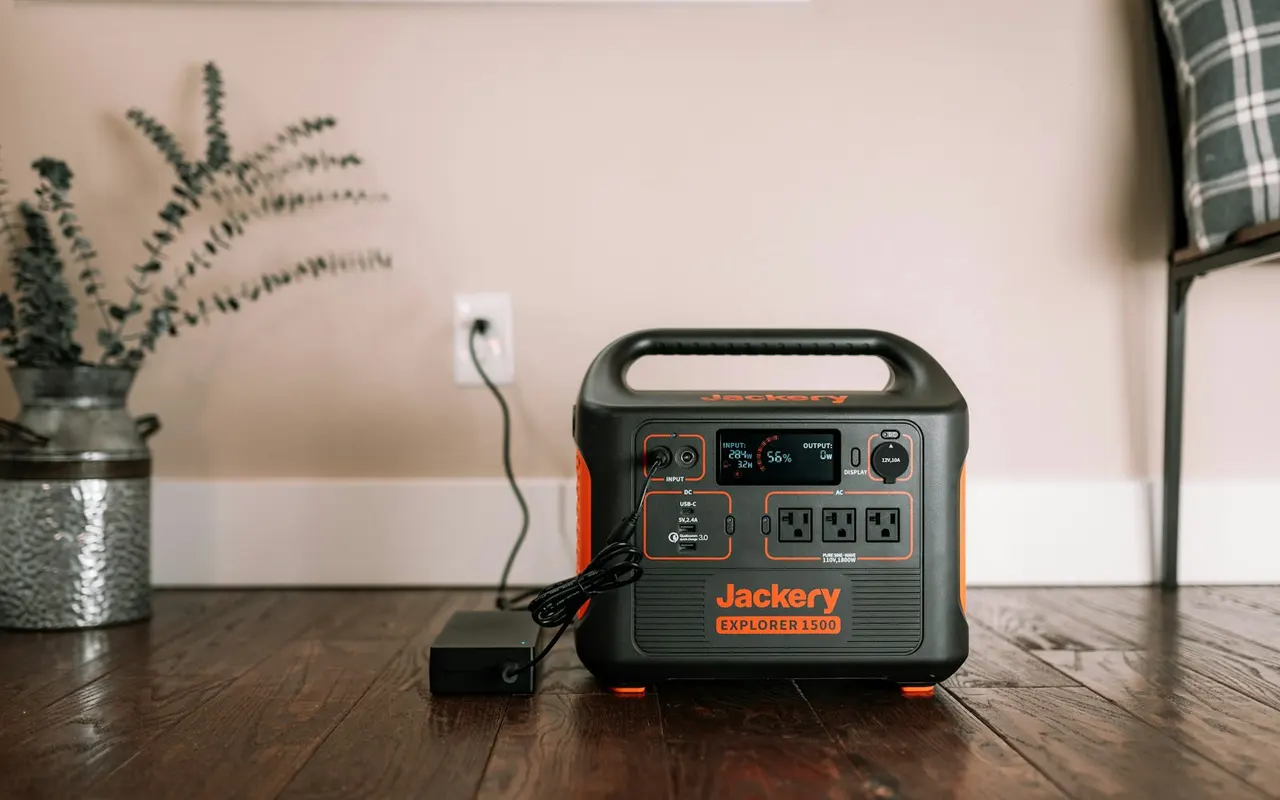
Plan for the battery, compatible charging equipment and the clearances in its manual. The pictured battery is an editorial example; check the exact models in the comparison.
Estimate your essential loads Photo: Jackery Power Station / UnsplashSolar charging needs its own plan
Check whether the package includes panels. Then match the panels' voltage and current with the station's solar input limits and the manufacturer's supported wiring arrangements. A matching connector alone does not establish compatibility.
For a simple planning example, 400W of panels multiplied by four equivalent full-sun hours gives 1,600Wh before losses. Applying an illustrative 70% overall allowance gives 1,120Wh. Those are assumptions, not a local weather forecast or a promised charge rate. Shade, orientation, clouds, smoke, temperature and charging limits can reduce production. Avoid building a plan that only works on a perfect solar day.
For a longer interruption, compare daily energy use with a conservative recharge opportunity. Extra battery capacity stores more energy but does not create it. If you cannot recharge safely, reduce your loads or arrange another place to stay.
What a higher total budget should buy
- Enough usable storage for your measured essentials, with a reserve.
- A realistic charging option and compatible cables.
- Replacement or expansion parts you can identify by exact model.
- Clear seller, return, support and warranty terms for the listing you actually buy.
Get an installation quote before assuming a battery can back up home circuits. For occasional phone charging and lights, a smaller battery may be enough. For critical medical equipment, make a separate plan with the equipment provider; none of these comparisons certifies a medical backup system.
Next: estimate refrigerator energy needs, review the backup power decision guide, or build your two-week preparedness checklist.
Sources and selection method
We compared published capacity, rated output and intended household fit. We have not physically tested these products. Listings and bundles can change; confirm the exact unit before ordering.
- Jackery Explorer 1000 v2 specifications
- Anker original C1000 specifications
- EcoFlow DELTA Pro 3 specifications
- CDC power-outage safety
- CPSC generator and backfeeding warning
Use the interactive equipment comparison to narrow these options. For a basement pump, begin with the sump-pump system checklist before assuming battery compatibility.