







Keep essential loads running first
A backup system starts with a short list: refrigerator, lights, phones, router, or another specific appliance. Whole-home heating, central air conditioning, and well pumps can need much more power and different connections. Decide which loads you can switch off before choosing a larger battery.
Write down both the energy those appliances use over time and the power needed to start them. A battery's watt-hour capacity helps estimate duration; its watt rating limits what it can run at once. Neither number alone tells you whether a refrigerator will start or last through the night.
Find the right size before you buy
- Battery backup for a refrigerator
Use measured daily energy, an adjustable runtime calculator, and startup checks. - Solar generators and portable power stations for home backup
Compare 1 kWh and 4 kWh battery options, solar charging limits, and connection needs. - Whole-house battery backup
Installed home batteries: what they run, what they cost, and when a portable station is the better fit. - Power station calculator
Pick what you would plug in during an outage and see which stations can run it, start it and keep it going.
Connection safety comes first. Plug suitable appliances directly into a portable station following its instructions. Connecting backup equipment to house wiring requires an approved installation by a qualified electrician. Never feed electricity into a wall outlet. Fuel-powered generators must run outdoors, at least 20 feet from doors, windows, and vents; a garage is not a safe location.
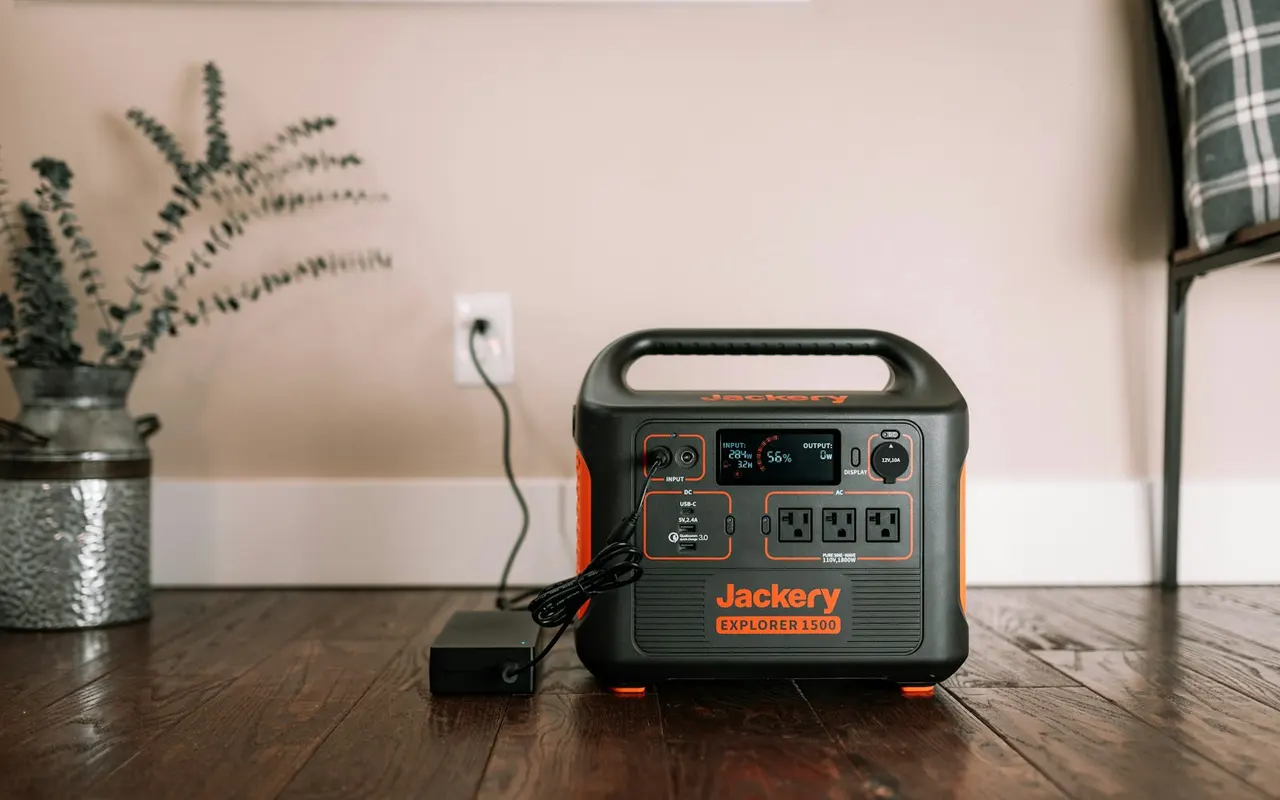
A portable battery is one part of an outage plan. Compare energy, output and charging separately; this stock photograph shows a category example, not a tested recommendation.
Compare backup battery options Photo: Jackery Power Station / UnsplashEstimate one outage day
As an example, a 62.5W average refrigerator load for 24 hours plus 20W of lights and communication for 6 hours uses 1,620Wh. At an illustrative 80% usable-energy allowance, that calls for 2,025Wh of nominal capacity before a separate reserve. Output and startup compatibility are separate checks.
Build the rest of your outage plan
Budget for the complete setup: compatible panels or charging cables, a safe location, and any required electrical work. A smaller system used for fewer appliances can be more useful than a large battery with no way to recharge during a long outage.
Pair your power plan with stored drinking water, a two-week household supply plan, and a place to go if your home becomes too hot, cold, or smoky. Powered medical equipment needs a device-specific plan agreed with its supplier and your care team.
Safety sources: CDC power outage guidance and CPSC generator and backfeeding warnings.